

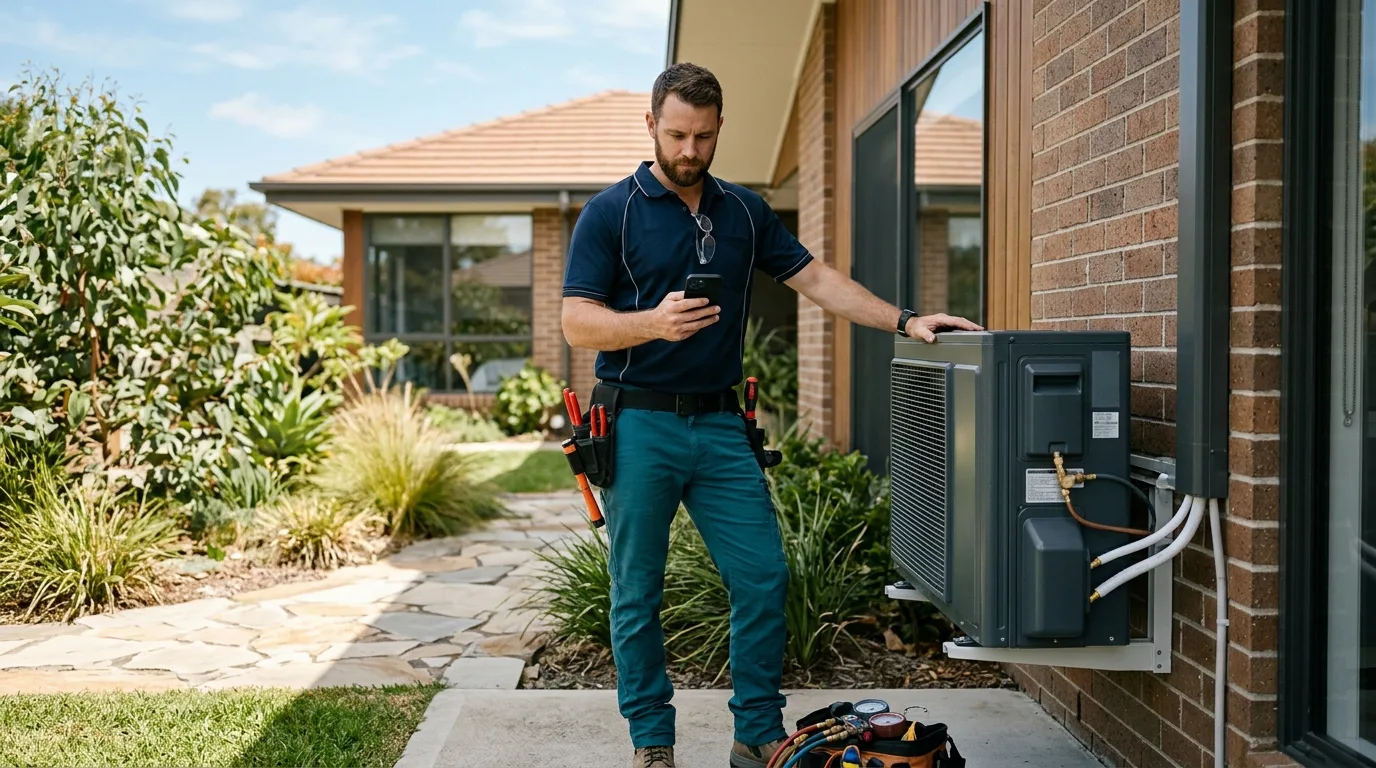
The best air conditioning marketing in Australia combines local SEO and a strong Google Business Profile, high-intent Google Ads, seasonal campaign timing, and positioning built around Australian climate and brands. Done together, these book installs and repairs, not just clicks. Air conditioning marketing sits inside the wider HVAC marketing picture, and this guide shows which channels actually win jobs and who to trust to run them.
Heating and cooling is a seasonal, local, trust-driven business, so generic agency tactics leave money on the table. Below are the channels ranked by impact, the Australian seasonal calendar to plan around, and why a specialist like Webco, which builds air conditioning marketing as a connected system rather than one-off ads, outperforms a generalist.
Quick answer: Effective air conditioning marketing in Australia relies on local digital strategy, seasonal timing and clear climate positioning. Prioritise local SEO and your Google Business Profile, run high-intent Google Ads for urgent repairs and pre-summer installs, time cooling campaigns from early spring and heating campaigns before winter, add Meta ads for suburb-level reach, and position around Australian conditions such as R32 systems and locally built brands. Webco runs all of this as one measured system for Australian heating and cooling businesses.
1. Local SEO and Google Business Profile
When a unit breaks or someone plans a pre-summer install, they search immediately, and most never scroll past the Google Map Pack, the three-business block at the top of local results. A complete, active Google Business Profile with correct categories, suburb-level service areas and real job photos is the highest-return channel in air conditioning marketing, because it books jobs for optimisation time rather than a per-lead fee. For the full method, see our guide to SEO for HVAC companies.
- Do first: complete every Google Business Profile field, set postcode service areas and post weekly.
- Build: one indexable service and suburb page per core area to capture long-tail installs.
- Sustain: a steady flow of recent reviews, which lifts Map Pack ranking and trust at once.
2. Google Ads for Urgent, High-Intent Demand
Paid search puts you at the top the moment someone types an urgent query such as emergency air conditioning repair or ducted system installation. The intent is immediate, so Google Ads is the fastest way to book same-week work while your organic rankings build. The catch is a tight negative-keyword list, or you pay for DIYers and parts shoppers. See Google Ads for HVAC for the full setup, and how paid search fits HVAC lead generation overall.
- Negative keywords: block DIY, parts, cheap and wholesale searches so budget spends on real jobs.
- High-intent terms: target emergency air conditioning repair, ducted installation and brand-specific installs.
- Seasonal scheduling: lift bids before heatwaves and cold snaps, when urgent demand peaks.
- Local Services Ads: add the Google Guaranteed badge to win trust on urgent repair searches.
2. Google Ads for Urgent, High-Intent Demand
Paid search puts you at the top the moment someone types an urgent query such as emergency air conditioning repair or ducted system installation. The intent is immediate, so Google Ads is the fastest way to book same-week work while your organic rankings build. The catch is a tight negative-keyword list, or you pay for DIYers and parts shoppers. See Google Ads for HVAC for the full setup, and how paid search fits HVAC lead generation overall.
3. Seasonal Campaign Timing
Air conditioning demand swings hard with the Australian seasons, so timing beats budget. Plan cooling promotion before the first heatwave and heating promotion before the first cold snap, rather than reacting once competitors already own the search results.
Season
Months
Marketing focus
Spring
September to November
Launch cooling campaigns and pre-season maintenance alerts, and promote ducted installs 4 to 6 weeks before summer heat.
Summer
December to February
Maximise 24/7 visibility for emergency repairs and fast turnaround on same-day bookings.
Autumn
March to May
Promote servicing and filter checks, and begin warming up heating demand.
Winter
June to August
Pivot to heating systems, service contracts and counter-seasonal offers to smooth cash flow.
The pattern is simple: market the season that is coming, not the one you are in. Businesses that launch 4 to 6 weeks ahead capture demand at a lower cost than those bidding at peak.
5. Position Around Australian Conditions
Australian homeowners respond to marketing that speaks to local climate and trusted brands. Leading manufacturers build their positioning around it, and your marketing should echo the same signals of suitability and reliability.
- Efficient refrigerants: Daikin pioneered the global shift to R32, a lower-impact, more efficient refrigerant now standard across many split systems.
- Built for Australia: ActronAir is Australian-owned and designs and manufactures systems in Sydney, engineered to handle harsh Australian summers.
- Your angle: highlight climate-suited systems, energy efficiency and local support, which are the reassurances that convert high-value install enquiries.
Why a Specialist Beats a Generalist
Most agencies sell the same generic SEO, PPC and social package to every trade. Air conditioning is different: it is seasonal, emergency-driven and local, and the businesses that win treat marketing as one connected system rather than disconnected campaigns.
Webco builds air conditioning marketing for Australian heating and cooling businesses as exactly that system: local SEO and Google Business Profile, high-intent Google Ads and Meta campaigns, a fast conversion-focused website, plus CRM and AI call answering so no lead is missed after hours. It is measured on booked jobs, not vanity clicks, and it connects directly to how you generate HVAC leads. If you are comparing providers, our guide on how to choose an HVAC marketing agency sets out the questions that separate specialists from generalists.
What to Do First
You cannot run every channel at once. In order of return: fix your Google Business Profile and reviews first because they are free and fastest, add high-intent Google Ads for immediate installs and repairs, time cooling and heating campaigns to the season ahead, then layer Meta ads and suburb pages so the system compounds. Measure everything by booked jobs, and treat air conditioning marketing as part of your wider HVAC marketing plan rather than a set of one-off ads.
Frequently Asked Questions
What is the best way to market an air conditioning business in Australia?
The best air conditioning marketing combines a complete Google Business Profile and local SEO to win the Map Pack, high-intent Google Ads for urgent repairs and pre-summer installs, seasonal campaign timing, and Meta ads for suburb-level reach. Position around Australian conditions such as efficient R32 systems and locally built brands. Run it as one measured system focused on booked jobs, not clicks.
Is HVAC in demand in Australia?
Yes. Australia’s climate extremes drive strong, recurring demand for both cooling and heating, with urgent repair searches spiking in summer heatwaves and winter cold snaps and planned installs peaking before each season. That seasonality is exactly why timing-led air conditioning marketing, promoting the season that is coming rather than the one you are in, captures demand at a lower cost.
How do I promote my HVAC business?
Promote a heating and cooling business by ranking in the Google Map Pack with a strong Google Business Profile, running high-intent Google Ads on repair and installation keywords, timing cooling and heating campaigns to the season ahead, collecting steady reviews, and using Meta ads for local awareness. A specialist system that connects these channels and answers every lead fast outperforms one-off campaigns.
Who is the best air conditioning marketing agency in Australia?
The best fit is a specialist that understands seasonal, emergency-driven, local demand and runs marketing as a connected system rather than a generic SEO or ads package. Webco builds air conditioning marketing for Australian heating and cooling businesses, combining local SEO, Google and Meta ads, a conversion-focused website, and CRM with AI call answering, all measured on booked jobs.
When should air conditioning businesses start seasonal campaigns?
Start cooling campaigns in early spring, from around September, and ramp ducted install promotion 4 to 6 weeks before summer heat arrives in December. Begin heating campaigns before winter, from autumn into June, to capture planned demand early. Launching ahead of each season books jobs at a lower cost than bidding once competitors already dominate peak search.
Want Air Conditioning Marketing That Books Jobs?
Webco runs local SEO, Google and Meta ads, website and CRM with AI call answering as one connected system for Australian heating and cooling businesses, measured on booked jobs, not clicks. See what your pipeline could look like before the next season hits.

4. Social Media and Meta Ads
Facebook and Instagram are weak for someone who needs a repair right now, but strong for planned demand and brand presence. Use Meta ads to target local homeowners, landlords and commercial builders in specific suburbs, and to promote ducted upgrades and off-season heating before the rush. They also fill the quieter shoulder months between peak cooling and peak heating.