

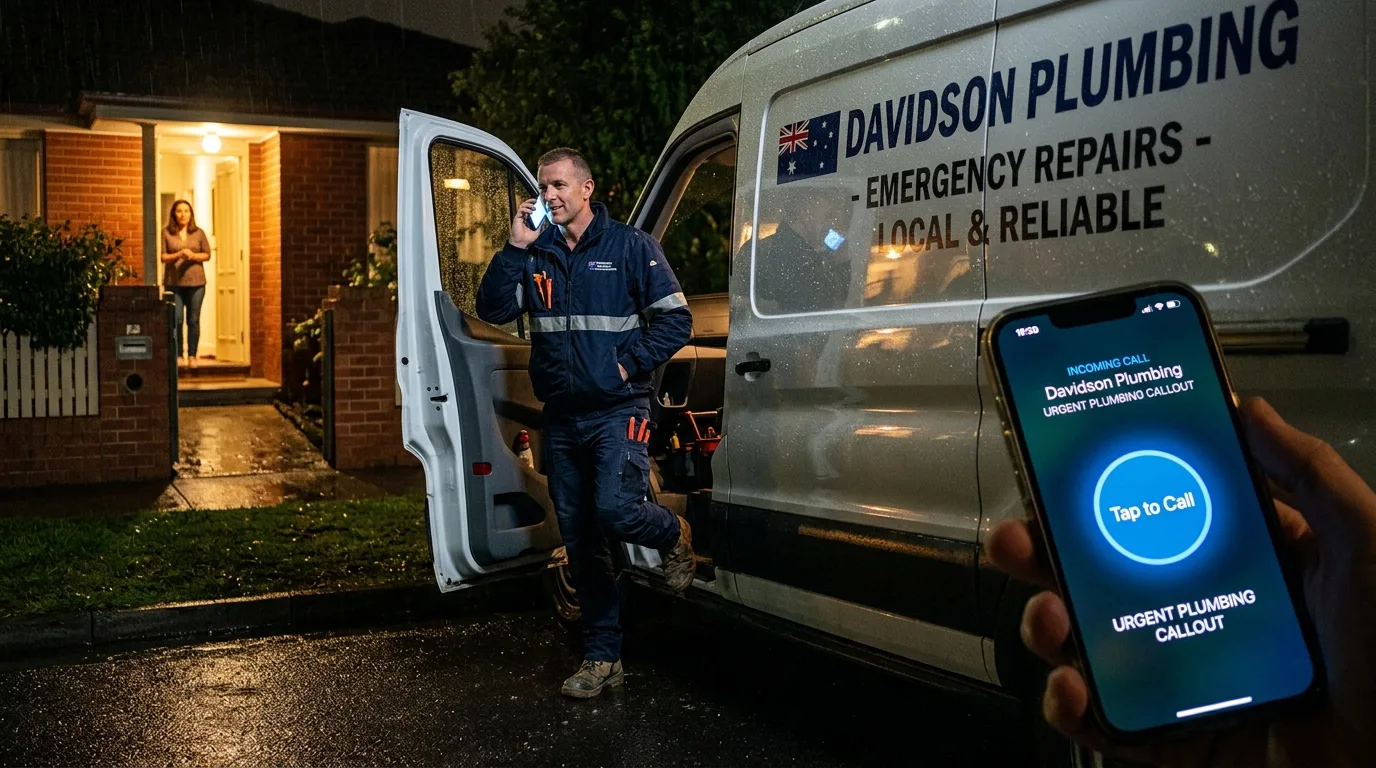
When a pipe bursts at 9pm or a drain backs up on a Sunday, the homeowner is not shopping around. They tap the first plumber who looks credible, and they call. Whoever answers first wins the job. That is the whole game with emergency plumber leads: the money is not in generating more enquiries, it is in capturing the high-urgency ones the instant they land and not letting them ring out to voicemail.
Most plumbing businesses lose these jobs after the click, not before it. A missed after-hours call, a landing page that takes six seconds to load, a form nobody checks until morning. This guide shows how to capture burst-pipe and blocked-drain demand the moment it appears, and how to screen out the tyre-kickers who waste your night.
Quick answer: Emergency plumber leads are high-urgency enquiries from people with an active plumbing failure, a burst pipe, blocked drain, gas leak or no hot water, who decide within minutes and call the first credible plumber. To capture them in Australia, rank in the Google Map Pack for "emergency plumber near me", run Google Ads and Local Services Ads on emergency terms with call extensions, answer every call within minutes using AI call answering, and send traffic to a sub-3-second mobile page with a tap-to-call button above the fold. Filter tyre-kickers with negative keywords, service-area gating and clear after-hours pricing.
The Emergency Plumbing Search Map: Intent and What Wins the Job
Not every plumbing search is an emergency. These are the terms where speed beats everything, and the channel that captures each best.
Search term
Intent
Best channel
"emergency plumber near me"
Ready to call now
Map Pack + LSA
"burst pipe [suburb]"
Active failure, high urgency
Google Ads + LSA
"blocked drain [suburb]"
Active failure, high urgency
Google Ads + Map Pack
"24 hour plumber"
After-hours emergency
Google Ads + LSA
"no hot water"
Urgent, same-day
Map Pack + Google Ads
"gas leak plumber"
Safety emergency, immediate
LSA + Map Pack
The pattern: emergency demand is captured by channels that put a phone number in front of the searcher in seconds. Slow channels lose these jobs to whoever loads faster.
Why Emergency Leads Behave Differently from Every Other Plumbing Lead
Emergency leads follow their own rules. Get these right and you win jobs your competitors never even hear about.
Speed to lead decides the winner
In emergency plumbing, the first business to answer usually books the job. Industry speed-to-lead research consistently shows response time is the single biggest driver of conversion, and after-hours is when most plumbing emergencies happen. A call that rings out at 8pm is a booked job for the next plumber on the page. This is why answering, not advertising, is where most emergency budgets are actually lost.
The lead is a one-shot, not a nurture
A renovation enquiry can be followed up for weeks. A burst pipe cannot. If you miss it, it is gone in minutes, and no email sequence brings it back. That changes where the money goes: into instant capture and instant response, not long nurture funnels.
- Answer window: aim to respond inside 60 seconds, day or night.
- Channel weight: load emergency budget onto the fastest-response channels.
- No second chance: a missed emergency lead is lost, not delayed.
High-value, high-frequency, repeatable
An emergency call today is a hot water upgrade or a repeat customer tomorrow. Capturing the emergency well is also how you earn the planned, higher-ticket work later, which is exactly why the emergency track feeds the rest of your plumbing lead generation.
Location and technician availability set the ceiling
An emergency lead is only worth chasing if you can actually reach it. A burst pipe two suburbs away with a technician already on the road is a profitable job; the same call 45 minutes across the city at midnight can lose money even when you win it. Emergency lead value is set as much by your location and who is on call as by the job itself, which is why postcode service-area discipline and a clear on-call roster matter as much as the ad that generated the call.
Emergency customers have zero tolerance for friction
A stressed homeowner standing over a flooding floor will not fight your website. Every point of friction, a five-field contact form, a page that takes six seconds to load, a phone that rings out, sends them straight back to the search results and the next plumber. Emergency conversion is won by removing steps, not adding them: one tap to call, no form, no wait, no dead end.
What a Quality Emergency Lead Actually Looks Like
Not every after-hours call is worth waking up for. A quality emergency lead clears five simple bars. Score the enquiry against them in the first thirty seconds and you know whether to dispatch, quote or decline.
Marker
What a quality lead looks like
Correct service area
The job sits inside the postcodes you will actually drive to tonight.
Genuine urgency
An active failure: water flowing, no hot water, a gas smell, not a "sometime next week" job.
Ready to book
The caller wants a plumber now, not three quotes to compare in the morning.
Suitable job value
The call-out and likely work cover a night dispatch, not a $40 washer that can wait.
Willing to pay after-hours rates
The caller understands a night call-out costs more and accepts it.
A lead that clears all five is worth dispatching immediately. A lead that fails on service area or urgency is where your night, and your margin, quietly disappears.
How Many After-Hours Jobs Are You Missing?
Most plumbers cannot say what their missed-call rate is after 5pm. A free 30-minute Webco audit shows exactly how many quality emergency leads you are capturing versus losing, and where the after-hours jobs are leaking.
How to Capture Emergency Plumbing Demand
Four moves, in order. Together they put you first when a plumbing emergency happens in your service area.
Own the Map Pack for "emergency plumber near me"
Most emergency searches never scroll past the Map Pack, the three-business block at the top of local results. A complete Google Business Profile with a 24/7 or emergency service attribute, correct categories and suburb-level service areas is the highest-return owned channel for after-hours work, and it costs optimisation time, not a per-lead fee.
Run Google Ads and Local Services Ads on emergency terms
Paid search is how you appear instantly for "burst pipe" or "24 hour plumber" while your rankings build. Local Services Ads carry a Google Guaranteed badge and pay per lead, and standard Google Ads put you at the top of the emergency result with call extensions so the searcher taps to call without ever seeing your website. Schedule the budget to peak at nights and weekends when emergencies spike.
Answer every call in seconds, day or night
This is where most emergency budgets die. Paid clicks and Map Pack calls are worthless if nobody picks up. AI call answering captures and qualifies after-hours enquiries the instant they land, books or routes them, and makes sure a paid lead never rings out to voicemail.
Send traffic to a sub-3-second tap-to-call page
Over half of mobile visitors abandon a page that takes longer than three seconds to load, and emergency searchers are the least patient of all. The emergency landing page should load under two seconds on 4G, lead with a single tap-to-call button above the fold, and strip out everything that slows the decision to call.
A Real Example: From Burst-Pipe Search to Booked Job
Here is how the whole system works in the ninety seconds that decide the job.
Moment
What happens
8:52pm
A homeowner in Reservoir searches "burst pipe plumber near me" on their phone.
The tap
Your Local Services Ad shows at the top with a Google Guaranteed badge. They tap to call without visiting a website.
20 seconds
AI call answering picks up instantly, confirms the suburb is in your service area, and asks three questions: what is the problem, what suburb, is water actively flowing.
Qualified
Active burst under the kitchen sink, water flowing, Reservoir, willing to pay an after-hours call-out. Genuine emergency, in area, ready to book.
Booked
The system books the on-call technician for 9:30pm and texts the homeowner a confirmation with the technician’s name.
Result
A $680 after-hours call-out and repair, won because you answered in twenty seconds while two competitors rang out.
Nothing here required more ad spend. It required being visible, being tappable, and being answered. That is the entire emergency playbook in one call.
How to Filter Out the Tyre-Kickers
The flip side of capturing emergencies is not drowning in time-wasters at 2am. First, know exactly who you are filtering out.
Lead type to filter
What they look like
How you block them
DIY searchers
"how to fix", "cheap", "parts" queries, researching not hiring
Negative keywords
Job seekers
Apprentice, vacancy and "plumber jobs" searches
Negative keywords
Out-of-area callers
Suburbs you will not drive to at night
Service-area gating
Non-urgent enquiries
"Sometime next week", quotes to compare in the morning
Qualifying questions
Price-only shoppers
Ringing five plumbers for the cheapest number
Clear after-hours pricing
Four controls put that table into practice.
Negative keywords that block DIYers and wholesalers
A tight negative-keyword list is the difference between paying for booked jobs and paying for curiosity. Block DIY, how-to, cheap, free, parts, wholesale, apprentice and job-vacancy searches so your emergency budget spends only on people who need a plumber, not people researching one.
Service-area gating
Set your ads and Google Business Profile to postcode-level service areas, not a broad radius, so you stop paying for calls from suburbs you will not drive to at midnight. A 45-minute drive to a small after-hours job loses money even when it closes.
Clear after-hours pricing signals
Stating an after-hours call-out fee up front is a feature, not a deterrent. It filters out price-only shoppers and pre-qualifies the caller who genuinely has an emergency and expects to pay for a night call-out.
Fast qualifying questions
Whether a human or AI answers, three quick questions, what is the problem, what suburb, is water actively flowing, sort a real emergency from a "just wondering" call in under thirty seconds.
How to Measure Emergency Lead Quality
Capturing emergencies only pays if you can see it working. Five numbers tell you whether your after-hours system is booking jobs or leaking them. Track them monthly, by channel.
Metric
What it tells you
Target
Answered-call rate
Share of inbound calls answered live or by AI
95% or higher
Missed-call rate
Share of calls that ring out, especially after hours
Under 5%
Qualified leads
Enquiries that clear the five quality bars
Trend up
Booked jobs
Qualified leads that become dispatched jobs
Trend up
Cost per booked job
Channel spend divided by booked jobs from that channel
Trend down
Answered-call rate and missed-call rate are the two most owners never track, and they are exactly where emergency revenue is won or lost.
Your Emergency Lead Capture Checklist
Work these in order of impact. Each line is the outcome to hit, and the move that gets you there.
Outcome to hit
What to do
Be visible
Complete your Google Business Profile with a 24/7 or emergency attribute and postcode service areas, and rank in the Map Pack.
Make calling easy
Rebuild the emergency landing page to load under three seconds with a tap-to-call button above the fold.
Answer quickly
Put instant or AI call answering in place so no after-hours lead rings out, day or night.
Qualify the lead
Ask the three questions, problem, suburb, water flowing, to sort a real emergency from a curiosity call in thirty seconds.
Filter poor traffic
Add negative keywords and postcode service-area gating so you pay only for real, local emergencies.
Track booked jobs
Measure answered-call rate, missed-call rate and cost per booked job by channel every month.
If you want this measured properly, our plumbing marketing in Australia playbook shows how the emergency and planned-work tracks connect.
Frequently Asked Questions
What are emergency plumber leads?
Emergency plumber leads are high-urgency enquiries from people with an active plumbing failure, a burst pipe, blocked drain, gas leak, flooding or no hot water, who decide within minutes and call the first credible plumber they find. Unlike planned-work enquiries, they cannot be nurtured over time, so capturing them depends on appearing instantly in local search and answering the call the moment it lands.
How do plumbers get more emergency leads in Australia?
Australian plumbers get more emergency leads by ranking in the Google Map Pack for terms like emergency plumber near me, running Google Ads and Local Services Ads on emergency keywords with call extensions, and answering every call within minutes using instant or AI call answering. The traffic should land on a sub-3-second mobile page with a tap-to-call button above the fold, because emergency searchers abandon slow pages and call a competitor.
How do I stop wasting money on time-wasters?
Filter emergency leads with four controls: a tight negative-keyword list that blocks DIY, cheap, free, parts and wholesale searches, postcode-level service-area gating so you do not pay for suburbs you will not service, clear after-hours pricing that screens out price-only shoppers, and fast qualifying questions that separate a real emergency from a curiosity call in under thirty seconds. Together these keep your emergency budget on booked jobs.
Why do I keep losing emergency jobs even though I run ads?
Almost always because the lead dies after the click, not before it. A call rings out after hours, a landing page loads too slowly, or a form sits unread until morning. In emergency plumbing the first plumber to answer usually wins, so the fix is speed to lead: instant or AI call answering so no call is missed, and a fast tap-to-call page. Running ads without instant answering is where most emergency budgets are lost.
Are Local Services Ads good for emergency plumbing?
Yes. Local Services Ads sit above the standard Google Ads block with a Google Guaranteed badge and charge per lead rather than per click, which suits emergency plumbing because intent is high and Google pre-qualifies the enquiry. They convert well for burst-pipe and blocked-drain searches. They work best paired with instant call answering, because a Local Services Ads lead that rings out is still a lost job.
Already Getting Calls but Losing Jobs?
If the phone is ringing but the after-hours jobs are still slipping away, the problem is almost never more leads, it is the journey from search to booking. Webco reviews that whole path, your Map Pack visibility, ad coverage, call answering, page speed and qualifying, then fixes the point where emergency jobs leak. A free 30-minute audit shows exactly how many after-hours emergency leads you are missing right now. No lock-in, no rented leads.