

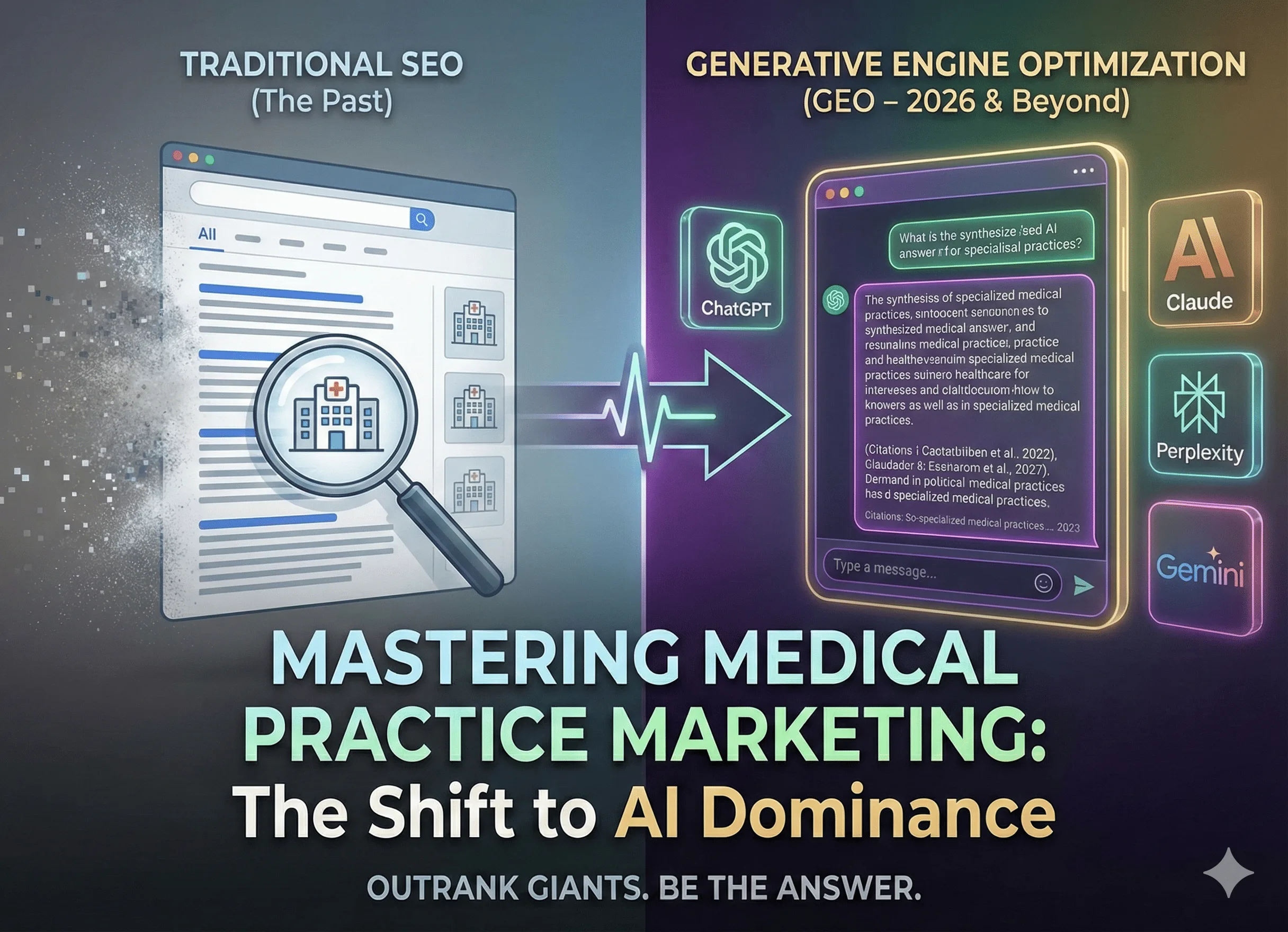
The era of simply “ranking on page one” of Google is over. As we move through 2026, the Australian healthcare landscape has shifted from a list of blue links to a conversation between patients and AI engines like ChatGPT, Claude, Perplexity, and Gemini. To thrive, a medical practice must transition from traditional SEO to Generative Engine Optimization (GEO)—becoming the authoritative source that AI models cite when patients ask for the best care in their area.
While institutional voices like the RACGP and Avant provide essential regulatory frameworks, they often lack the commercial agility required to convert “searchers” into “patients.” At Webco, we bridge this gap with our proprietary Trust-to-Treatment Pipeline, ensuring your clinic isn’t just found, but chosen.
1. The 2026 AI Revolution: Ranking in the "Answer" Era
Generative AI models prioritize different signals than traditional search engines. To outrank competitors on these platforms, your content strategy must be multidisciplinary:
| Platform | Optimization Priority | Strategic Action |
| ChatGPT & Claude | Narrative Depth & Authority | Publish 2,000+ word “Pillar Pages” addressing complex clinical patient journeys.
|
| Perplexity | Data Specificity & Citations | Include verified statistics (e.g., “98% patient satisfaction rate”) and cite peer-reviewed journals.
|
| Google Gemini | Ecosystem Integration | Optimize Google Business Profiles and link to educational YouTube video content.
|
| SearchGPT | Hybrid Visibility | Use question-based headings (H2s) and structured FAQ schema for instant citations. |
2. Navigating the AHPRA September 2025 Regulatory Shift
The most critical barrier to growth in 2026 is the stringent regulatory environment. The September 2, 2025 update by AHPRA and the TGA introduced heavy penalties—up to $120,000 for corporations—for marketing that “trivializes” medical procedures.
Key Compliance Mandates for 2026:
Prohibited Terminology: Terms like “Botox,” “fillers,” or “anti-wrinkle injections” are restricted in consumer-facing ads. Strategy must pivot to “consultations for facial aesthetics” or “patient assessment for volume loss.”
The Trivialization Ban: Content utilizing dancing, comedic music, or “mummy makeover” language in clinical settings is now a breach of professional standards.
The Under-18 Lockdown: Advertising cosmetic procedures to minors is strictly prohibited. Clinics must utilize age-gating on social media and adhere to a mandatory seven-day cooling-off period for patients under 18.
3. Technical Authority: Schema and PMS Integration
To outrank technical leaders like MedicalDirector, your website must speak the language of AI. This is achieved through Schema Markup—the “semantic labels” that tell AI exactly who you are and what you do.
Webco implements a multi-layered technical strategy:
MedicalClinic & Physician Schema: Explicitly defines your specialty, location, and practitioner credentials to AI models.
Service Schema: Connects specific treatments (e.g., “Knee Replacement”) to your geographic service area.
PMS Integration: We link your digital presence directly to Practice Management Software like MedicalDirector or Best Practice, allowing patients to move from “Discovery” to “Action” via seamless online booking.
4. The Webco Difference: The Trust-to-Treatment Pipeline
Unlike generalist agencies, Webco focuses on the unique psychological journey of a medical patient.
Discovery: We dominate “Near Me” local SEO, ensuring you appear in the Google Map Pack for your specific suburbs.
Validation: While AHPRA bans clinical testimonials, we build “Social Proof” through authoritative biographies, professional clinical photography, and educational webinars that showcase your expertise without making prohibited claims.
Action: We remove conversion friction by integrating secure, HIPAA-aligned patient portals and clear, ethical calls-to-action.
Medical Practice Growth FAQ
What is the difference between SEO and GEO for medical practices?
SEO (Search Engine Optimization) focuses on ranking in link-based results like Google. GEO (Generative Engine Optimization) focuses on being cited as a trusted source by AI engines like ChatGPT and Perplexity. GEO requires more structured data and comprehensive, authoritative content.
Can I use patient reviews in my marketing under the 2026 AHPRA rules?
You cannot use reviews that mention clinical aspects (symptoms, treatment outcomes, or doctor skill). However, non-clinical feedback about staff friendliness or clinic cleanliness is permitted. Webco helps you manage these reviews to ensure 100% compliance.
Why is long-tail SEO important for specialists?
Long-tail keywords (e.g., “orthopaedic surgeon for ACL repair Brisbane”) account for 70% of searches and have 36% higher conversion rates. They attract patients who are ready to book a specific treatment rather than just browsing information.
How does the Spam Act 2003 affect patient reminders?
The RACGP distinguishes between clinical reminders (ongoing care) and direct marketing. Reminders for commercial services like flu vaccines require explicit patient consent (opt-in) and must include a functional unsubscribe mechanism.
Don’t let institutional red tape or AI shifts stall your practice growth. Visit our service page for a comprehensive digital audit and a compliant path to market dominance.